
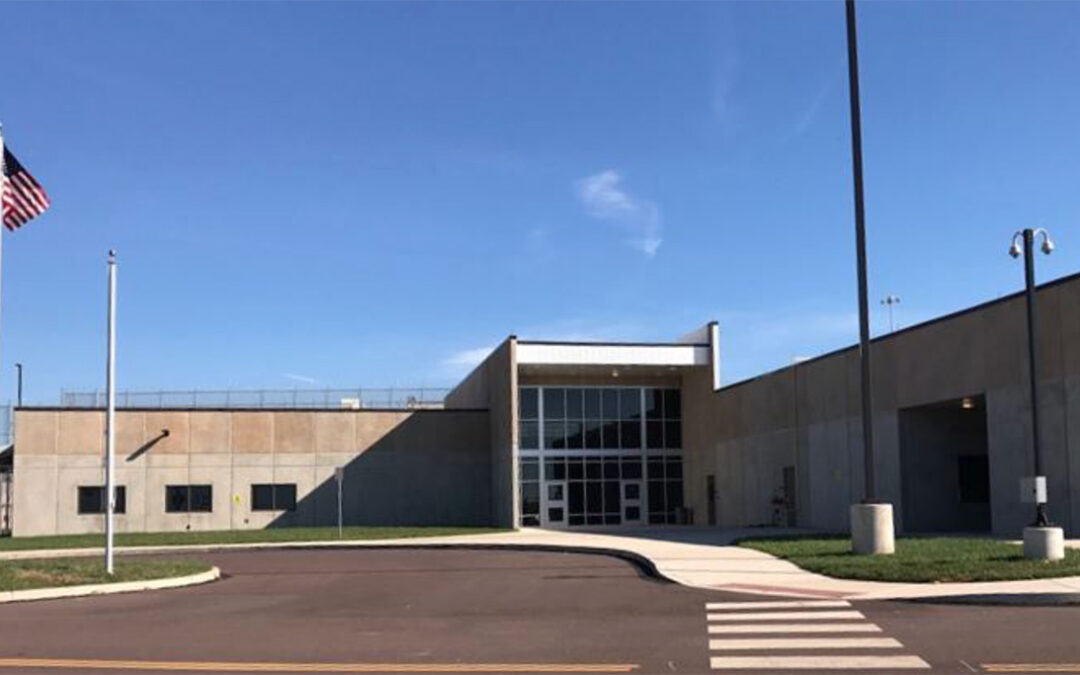
Montgomery County, PA – August 26, 2026 – Pennsylvania State Senator Amanda M. Cappelletti (D-17 Montgomery/Delaware) hosted a “Geriatric Parole Forum” on Tuesday, August 25 at the State Correctional Institution – Phoenix (SCI Phoenix), welcoming nearly 150 guests to the facility’s chapel.
The forum included two panel discussions. The first discussion featured voices from the incarcerated population at SCI Phoenix, where three men shared their stories before a panel of state legislators and advocated for parole pathways for aging and infirmed incarcerated people. Following their testimony was a conversation among Pennsylvania General Assembly members, leaders from the Pennsylvania Department of Human Services, and criminal justice experts, about potential legislative options for geriatric parole and compassionate medical release in the Commonwealth.
“Nearly half of all states already provide options for geriatric or medical parole. And with more than 11,000 incarcerated people now qualifying as geriatric, we know just how financially burdensome it is for Pennsylvania’s prison system to continue to house and care for this rapidly growing population,” said Senator Cappelletti, Democratic Chair for the Pennsylvania Senate Judiciary Committee.“Yesterday’s conversation provided us with a space to gather a diverse range of input so our legislature can craft comprehensive legislation that best serves our Commonwealth. Now is the time for Pennsylvania to adapt a responsible, evidence-based approach.”
The Case for Geriatric and Medical Parole Options
According to research conducted by Families Against Mandatory Minimums (FAMM), arrests drop steeply by the time people are in their early thirties, and almost three-quarters of arrests are of people below the age of 40. Similar trends are seen with recidivism rates, which The United States Sentencing Commission corroborates, citing that the recidivism rate of older offenders (21.3%) was less than half that of offenders under the age of 50 (53.4%).
“Incarcerated elders, people who are debilitated or incapacitated, and those nearing death are the most expensive and burdensome to incarcerate and the least likely to reoffend. It is sound and humane correctional policy to provide pathways to release for them,” said Mary Price, Senior Counsel at FAAM.
These statistics have reined true in communities where aging populations were resentenced or released back into their communities. A 2020 study monitored 174 people who were resentenced and released in Philadelphia after the Supreme Court of the United States ruled that juveniles receiving life sentences was unconstitutional.
After nearly two years being in their communities, only two individuals were reconvicted of any offense.
Following the famous Unger v. State case, 200 people serving life without parole in Maryland were released after serving 40 or more years. All of those released were originally convicted of a violent crime, and 97% did not recidivate upon release.
Maryland is one of at least 23 states (and the District of Columbia) that now provides options for geriatric and medical parole. The bill—Senate Bill 181, sponsored by Maryland Senator Shelly Hettleman (D-11, Baltimore)—passed the Maryland Senate last year 35-12, and the Maryland House at 104-36.
“Geriatric and medical parole reform is smart criminal justice policy. In Maryland, we recognized that we could keep our communities safe at the same time that we could target our limited resources more effectively,” said Senator Hettleman. “By releasing those who have severe medical needs that cannot be addressed in our carceral system, or who are older and have been incarcerated for substantial periods of time, we are using our public resources more humanely and more efficiently. We look forward to Pennsylvania joining Maryland in these actions.”
Keith Wallington, Senior Campaign Strategist at The Sentencing Project, was instrumental in helping get SB181 signed into law.
“Prior to SB181, geriatric parole simply didn’t work in Maryland. In a state fraught with racial disparities, geriatric parole reform was needed to address an aging population in Maryland’s legal system that disproportionately impacted people of color,” Wallington said.
Wallington said the success of SB181 can be attributed to the courage of the Ungers and returning citizens who testified and shared their stories, Senator Hettleman’s strong sponsorship, and collaboration between the Maryland Office of the Public Defender, the Office of the Attorney General, and the Maryland Equal Justice Collaborative.
“Pennsylvania now has the opportunity to achieve similar results through intentional partnership between legislators, advocates and experts across the criminal justice system,” Wallington said.
The Way Forward in Pennsylvania
In response to the testimonies from fellow General Assembly members, incarcerated individuals, and outside experts, Senator Cappelletti released a memo with Senator Sharif Street (D-3, Philadelphia) to the Pennsylvania Senate following the Forum with her intent to introduce legislation tackling this issue. Senator Cappelletti has also been proud to support bills to expand parole options, including Senator Street’s Senate Bill 135 and Senate Bill 136.
“Today I ask you to consider whether Pennsylvania can protect its citizens while also recognizing that mercy, accountability, and common sense can exist together,” said Craig Datesman, an incarcerated individual, during his remarks at the forum.
Datesman is 73 years old and has been incarcerated for 44 years. Datesman has been denied commutation—despite the support of the victim’s family and his rehabilitation—and continues to serve his life sentence.
“History will remember not only that we punished crime, but we had the courage to recognize rehabilitation, exercise sound judgement, and pursue justice with both strength and compassion,” Datesman said in closing.
In the Pennsylvania House, Representative Johanny Cepeda-Freytiz (D-129, Berks) is a co-sponsor of House Bill 1550 which would create a pathway to parole for incarcerated people aged 50 and older, who have served the lesser of 25 years in prison or one-half of their minimum sentence.
“Geriatric parole would provide support for our corrections system and those who the system has helped to redeem. Legislative collaboration between the House and Senate is a major step to ensuring a pathway to parole is possible in Pennsylvania,” said Representative Cepeda-Freytiz. “I am grateful to Senator Cappelletti for her work in bringing this legislation to the Senate, and I look forward to continuing our collaboration to help this measure become law.”
Senator Cappelletti wrote in her memo that her legislation intends to provide a data driven, humane, and fiscally responsible solution to a crisis that is already burdening Pennsylvania’s carceral system.
“The evidence is overwhelming, and the human and financial costs of doing nothing are undeniable. Here in Pennsylvania, we have a responsibility to care for every Pennsylvanian—no matter their community, or their past. We all deserve a second chance,” said Senator Cappelletti. “We’ve seen similar legislation succeed in our neighboring states. This Commonwealth must now come together—across chambers, agencies, and across the aisle—to implement meaningful change for aging and infirmed incarcerated people.”
August 25 Forum Panelists Included:
- State Senator Amanda M. Cappelletti, Chair of the Senate Judiciary Committee serving the 17th Senate District in Delaware and Montgomery Counties
- State Representative Johanny Cepeda-Freytiz, serving the 129th House District in Berks County
- Andrew Barnes, Executive Deputy Secretary, Pennsylvania Department of Human Services
- Mary Price, Senior Counsel, Families Against Mandatory Minimums
- Keith Wallington, Senior Campaign Strategist, The Sentencing Project
###